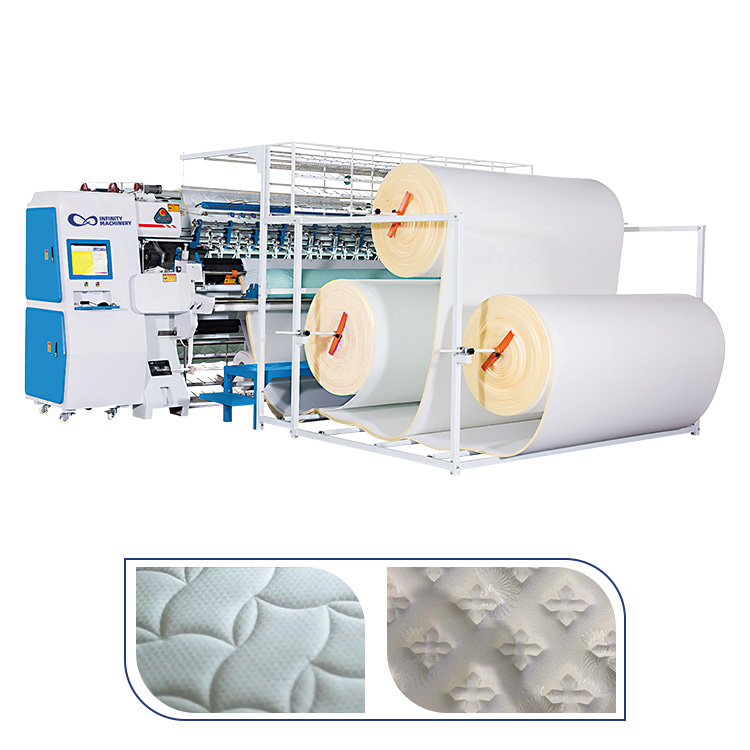
The pucker on the quilted cover is the visible defect that the customer sees first, and the high-speed quilting machine that runs faster also runs the risk of the fabric bunching. The pucker appears when the thread pulls the fabric, when the feed pushes the layers unevenly and when the thick cover bunches at the edge, and each cause has the different fix, so the factory that diagnoses the cause instead of guessing the setting solves the wrinkle at the root. The fix starts with the machine and the material working together: the IF-QS-26 Computerized Single-Head Quilting Machine runs the pattern with the programmable tension and the controlled feed, the IF-Q-1200 Computerized Chain Stitch Multi-Functional Quilting Machine handles the varied fabrics with the adjustable stitch system, and the IF-QS2-2 Double Beam Double Head Continuous Quilting Machine runs the continuous panels with the even tension across the width, so the machine with the right settings and the material with the right preparation produce the flat cover, and the pucker that once returned every shift becomes the rare exception.
The pucker appears because the quilting process pulls, pushes and bunches the fabric, and the high speed amplifies each force. The thread pull is the first cause: the needle carries the thread through the layers, the thread tension pulls the fabric along the stitch line, and the pulled fabric gathers into the pucker between the stitch rows, so the thread pull is the force that the tension settings control. The feed imbalance is the second cause: the feed mechanism moves the bottom layer while the top layer moves at the different rate, the mismatched layers shift and gather, and the gathered layer becomes the pucker and the misaligned pattern, so the feed imbalance is the force that the feed settings control. The speed is the third cause: the high-speed machine runs the needle and the feed at the high rate, the fabric does not settle between the stitches, and the fast cycle leaves the fabric in the gathered state, so the speed amplifies the thread and the feed problems that the slow machine would mask. The material is the fourth cause: the thin fabric and the thick batting move differently, the stretchy knit and the stiff woven respond differently, and the material that fights the feed produces the pucker, so the material is the variable that the settings must match. The pattern is the fifth cause: the dense pattern with the tight curves pulls the fabric in the many directions, the open pattern lets the fabric lie flat, and the pattern geometry shapes how much the quilting disturbs the fabric, so the pattern choice is the design lever of the flatness. The cause rule: thread pull, feed imbalance, speed, material and pattern are the five causes of the pucker, and the factory that names the cause for the specific panel fixes the setting that matches.
The tension is the first adjustment of the pucker fix, and the three tension points of the thread, the feed and the pull must balance. The thread tension is the first point: the needle thread and the bobbin thread meet in the stitch, the balanced tension locks the stitch inside the layers and the unbalanced tension pulls the fabric to the one side, so the thread tension is set so the stitch sits flat with the loops hidden. The feed tension is the second point: the feed dog and the presser foot control the fabric movement, the presser pressure that is too high stretches the top layer and the pressure too low lets the fabric slip, and the feed tension is set so the layers move at the same rate, so the feed tension balances the top and the bottom layer. The pull tension is the third point: the take-up mechanism pulls the thread after the stitch, the excess pull gathers the stitch line and the weak pull leaves the loose stitch, and the pull tension is set so the thread feeds smoothly without the gathering, so the pull tension controls the straightness of the seam. The test is the fourth element: the operator sews the test panel after the tension change, the test panel shows the pucker on the top or the bottom side, and the side of the pucker names the tension to adjust, so the test panel turns the tension problem into the directed fix. The record is the fifth element: the tension settings are recorded per material, the fabric roll and the batting type carry the known settings, and the operator loads the setting with the material, so the record removes the guess from the next run. The tension rule: balance the thread, the feed and the pull, test the panel, read the pucker side and record the settings, and the factory that runs the five keeps the tension matched to the material.
The feed and the presser problem shows as the sliding and the stretching fabric, and the fix aligns the movement of the layers. The presser pressure is the first adjustment: the presser foot holds the fabric against the feed dog, the high pressure marks and stretches the top layer, and the low pressure lets the top layer slip against the feed, so the presser pressure is set for the fabric weight, the heavier cover takes the higher pressure and the delicate fabric the lower. The feed dog is the second adjustment: the feed dog teeth grip the bottom layer and push it forward, the worn feed dog loses the grip and the low feed dog lets the layer stall, and the feed dog is checked and replaced at the wear, so the feed dog keeps the bottom layer moving with the machine. The upper feed is the third element: the machine with the upper feed mechanism moves the top layer with its own feed, the top and the bottom layers move at the matched rate, and the matched movement prevents the sliding and the stretching, so the upper feed is the machine feature that solves the multi-layer pucker. The needle timing is the fourth element: the needle enters the fabric as the feed completes the advance, the mistimed needle catches and pulls the fabric, and the timing check aligns the needle with the feed, so the needle timing removes the catch that gathers the fabric. The walking foot is the fifth element: the walking foot moves with the fabric, the thick cover and the multi-layer panel feed evenly under the walking foot, and the even feed prevents the top layer from bunching at the thick seams, so the walking foot is the accessory that handles the thick materials. The feed rule: set the presser for the fabric weight, maintain the feed dog, use the upper feed or the walking foot for the multi-layer and check the needle timing, and the factory that runs the four feeds the layers evenly and the pucker disappears from the moving panel.
The thick cover is the hardest material for the high-speed quilter, and the bunching at the edge is the defect that the thick pillow-top and the plush covers produce. The edge bunching is the first symptom: the thick cover is taller than the standard, the needle and the presser compress the edge, and the compressed edge gathers and bunches at the start and the end of the seam, so the edge bunching marks the thick-cover runs. The clearance is the first fix: the machine needs the clearance for the thick cover, the presser foot rises high enough for the material, and the throat space accepts the rolled bulk, so the clearance check confirms the machine can physically handle the thick cover. The speed reduction is the second fix: the high speed that works for the standard fabric bunches the thick cover, the reduced speed gives the thick material time to feed evenly, and the slower cycle produces the flat seam at the lower output, so the speed reduction trades the output for the quality on the thick runs. The needle size is the third fix: the thick cover needs the larger needle, the larger needle carries the stronger thread and penetrates the dense layers, and the smaller needle bends and deflected in the thick material, so the needle size is matched to the cover thickness. The edge guide is the fourth fix: the guide holds the edge straight as the fabric feeds, the wandering edge feeds at the angle and gathers, and the adjusted guide keeps the edge parallel to the stitch, so the edge guide prevents the angled feed that bunches the border. The seam direction is the fifth fix: the thick panel is quilted from the center to the edge, the center-out order lets the fabric settle instead of gathering toward the seam, and the direction plan reduces the bunch at the meeting seams, so the seam direction is the sewing-order fix for the thick cover. The thick rule: check the clearance, reduce the speed, match the needle, adjust the edge guide and plan the seam direction, and the factory that runs the five quilts the thick cover flat without the bunched edge.
The fix checklist turns the diagnosis into the routine, and the factory that runs the checklist catches the pucker before the panel becomes the cover. The material check is the first item: the fabric roll is inspected at the start, the roll with the uneven tension or the damaged edge is rejected, and the batting and the backing are matched to the spec, so the material check removes the bad input before the machine. The machine check is the second item: the needle, the tension and the feed are checked at the shift start, the worn needle and the dirty feed are corrected, and the machine starts the shift in the known condition, so the machine check removes the maintenance causes. The first-meter test is the third item: the operator sews the first meter of every roll, inspects the panel for the pucker and the misalignment, and adjusts before the roll runs, so the first-meter test catches the problem at the cheap point. The settings record is the fourth item: the material settings are recorded and reused, the roll change loads the recorded settings, and the recorded settings remove the per-run guess, so the settings record keeps the quality consistent across the rolls. The audit is the fifth item: the quality check measures the finished panels, the pucker rate is tracked per shift and per material, and the rising rate triggers the re-diagnosis, so the audit closes the loop and keeps the pucker fixed. The checklist rule: check the material, check the machine, test the first meter, record the settings and audit the rate, and the factory that runs the five produces the flat quilted cover shift after shift.
Contact our team for the IF-QS-26, IF-Q-1200 and IF-QS2-2 quilting machines with the tension and the feed systems that produce the flat panels.