Create the quilted surface of your mattress. Explore multi-needle chain stitch, lock stitch and single-needle machines to suit your panel construction and pattern requirements.

Multi-needle chain stitch quilting for mattress panels and patterned textile layers.
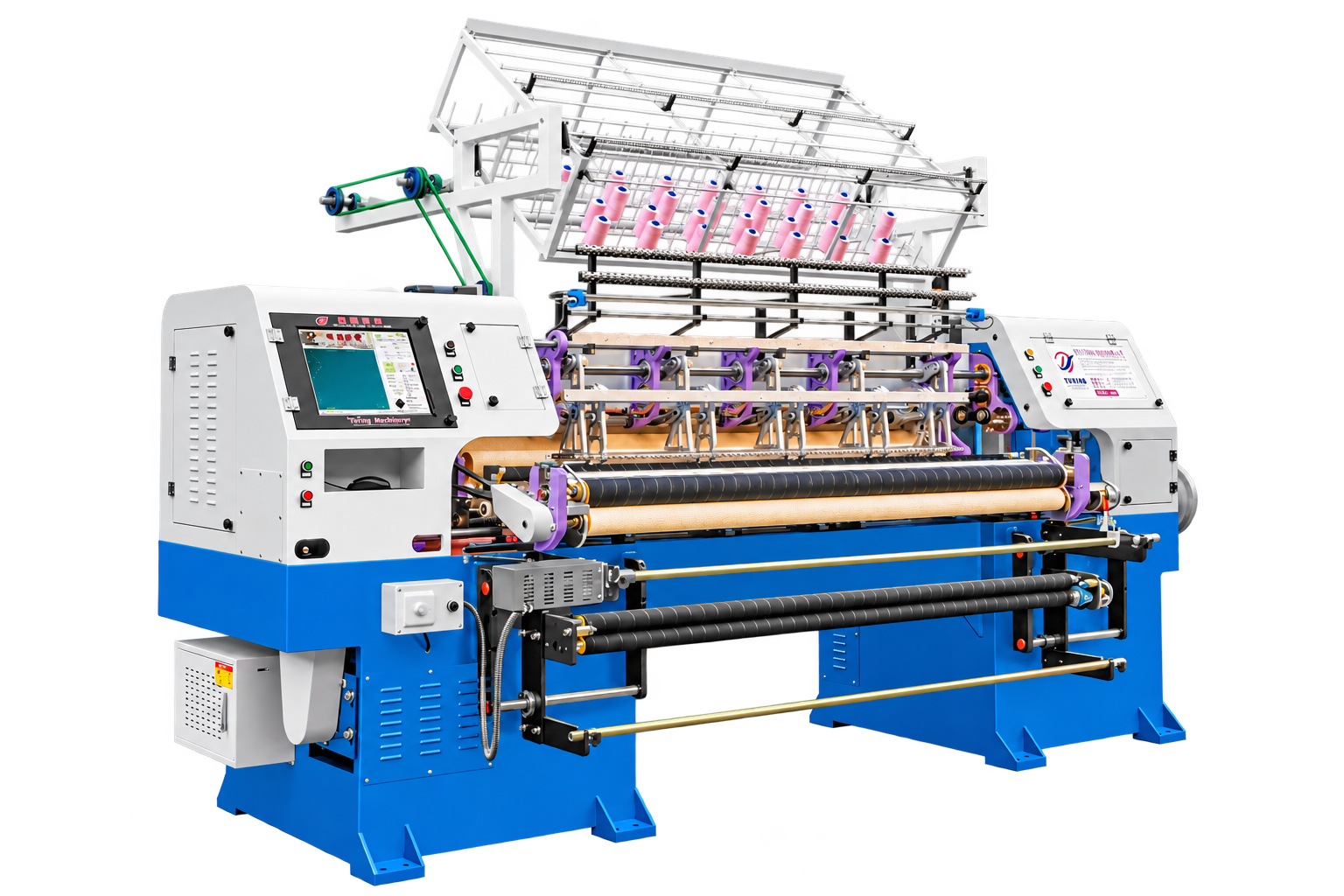
Computerized lock stitch quilting for mattress panels, with CAD pattern preparation.

Single-needle quilting with computerized pattern control, automatic feeding and edge trimming.

Computerized multi-needle quilting for mattress panels and patterned fabric layers.
Selection tip: Choose by stitch type, quilting pattern, working width and the thickness of your material layers.
Join the mattress panel and border with a finished tape seam. Compare automatic and semi-automatic machines for your mattress dimensions, sewing method and handling needs.
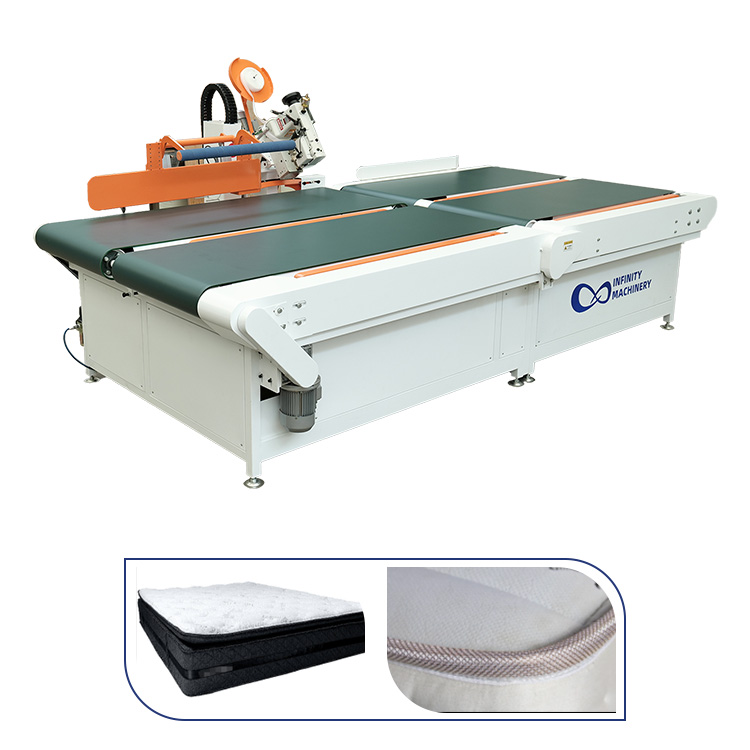
Automatic tape edging with a spacious workbench and chain stitch sewing head.
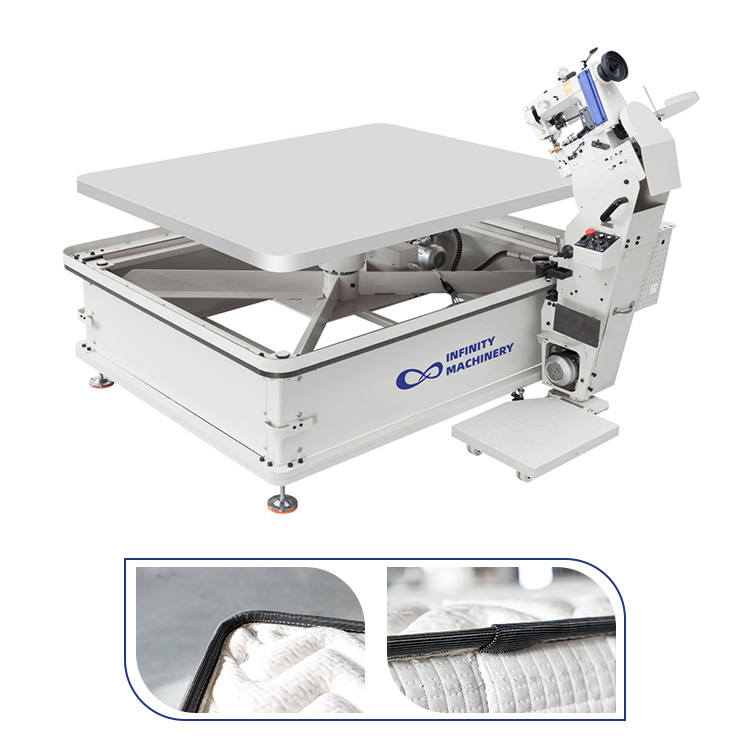
Chain stitch edge sewing with an electrically adjustable worktable and adjustable sewing head.

Semi-automatic edge sewing with chain stitch or lock stitch head options.

Tape edging with mattress positioning, automatic flipping and turning functions.
Selection tip: Check mattress height, corner handling, tape specifications and the level of operator involvement you need.
Prepare the details that define your mattress border. Select equipment for vertical handles, brand labels and linear quilting to match the design of your finished product.
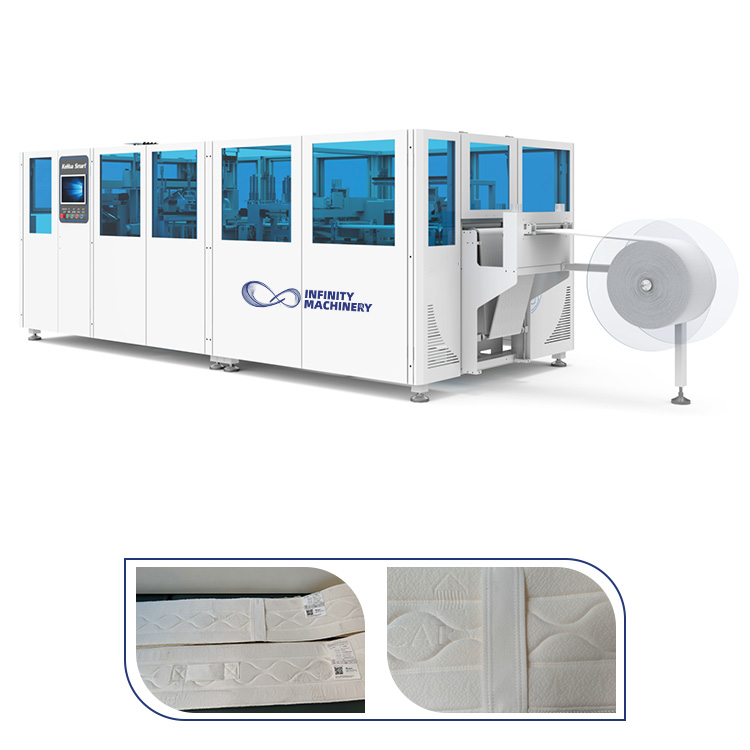
Vertical handle sewing with integrated border-processing functions for mattress production.

Programmable sewing for main, folded and standard labels on mattress borders.

Linear quilting with servo-controlled sewing speed and thread detection.
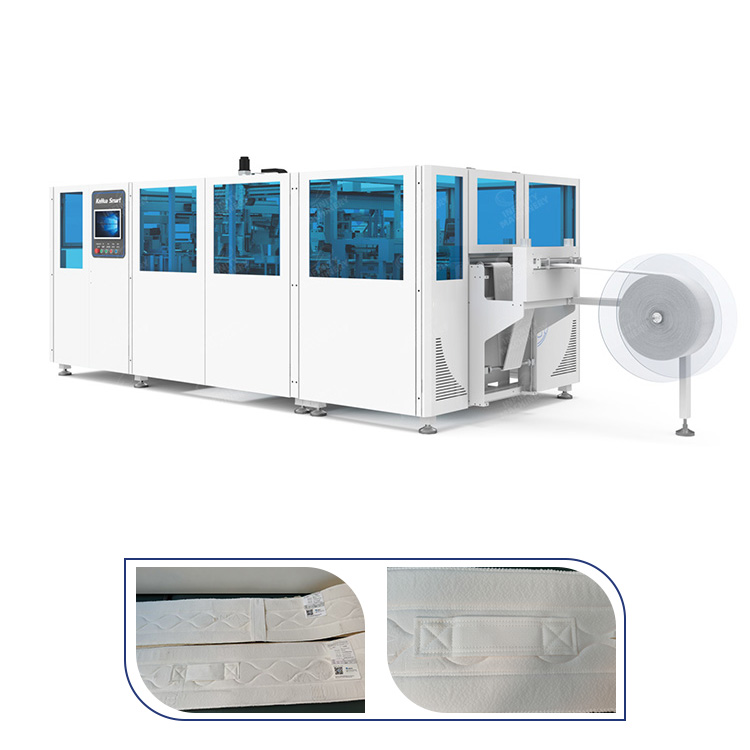
Automatic horizontal handle and label sewing for mattress border production.
Selection tip: Start with your border design: handle orientation, label format, decorative stitching and required processing steps.
Prepare quilted panel edges for mattress assembly. Explore automatic and heavy-duty flanging machines for different material layers, feeding requirements and production workflows.

Automatic panel flanging with a turning arm, cutting functions and touchscreen controls.
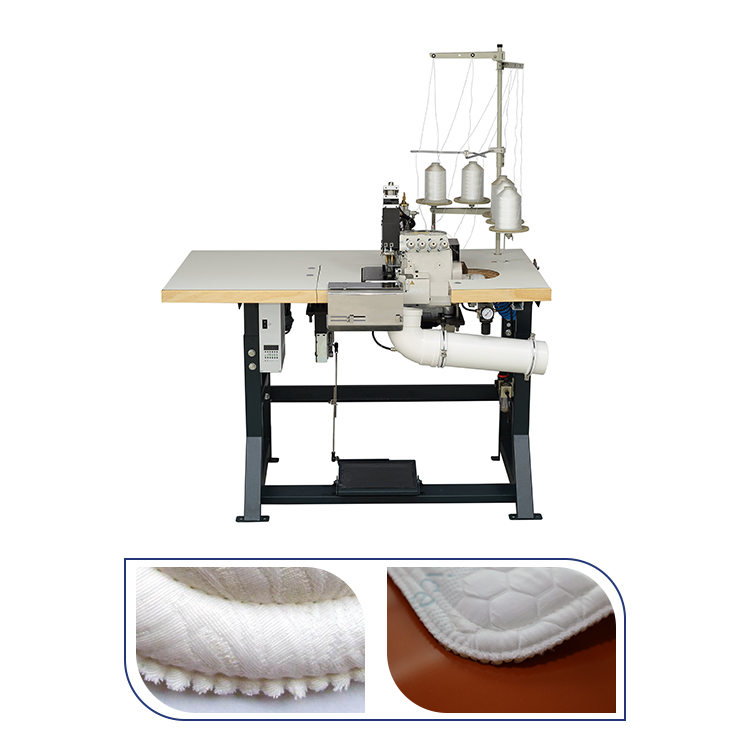
Heavy-duty flanging with synchronous feeding for thick and thin fabric assemblies.
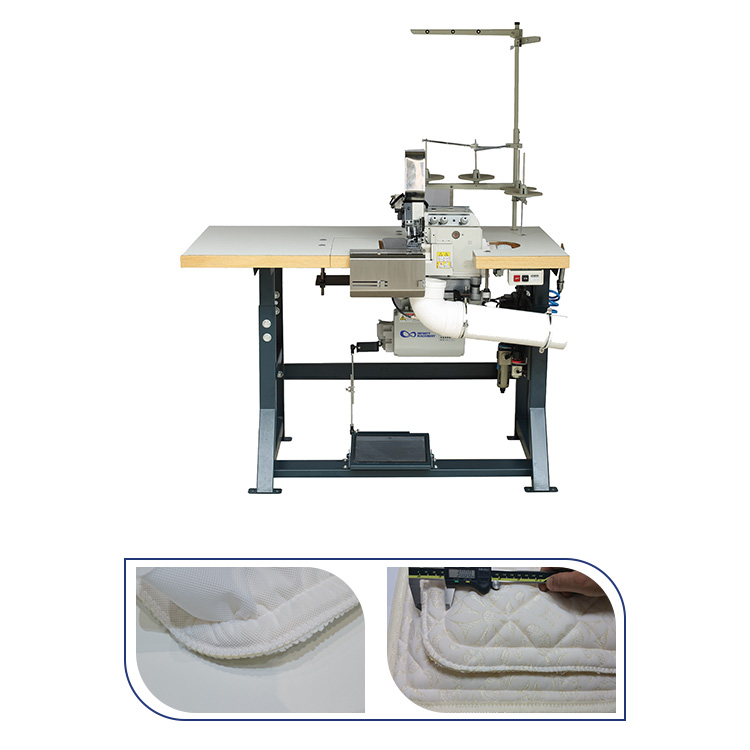
Synchronous material feeding for flanging thick mattress fabric layers.
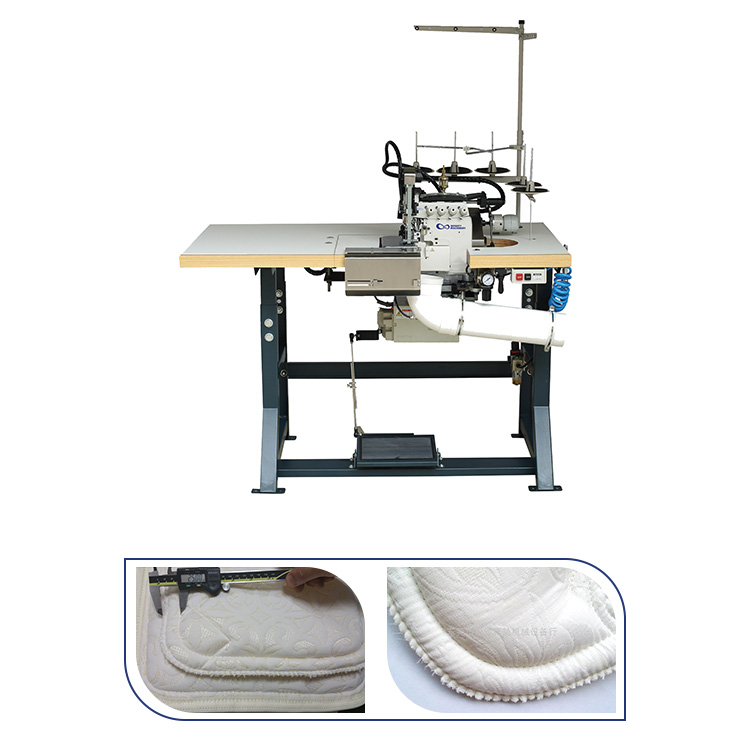
Selection tip: Share a sample of the complete material stack so feeding, edge finish and sewing suitability can be evaluated.
Start with the sewing operation, then match the machine to your materials and production requirements.
Share your quilting pattern, edge seam, border design or flanging sample. Identify which sewing operation you want to add or improve.
Prepare fabric samples, layer thicknesses, panel sizes and mattress dimensions. Include tape, label or handle details where relevant.
Tell us your target output, available space, power supply and current equipment so we can discuss a suitable configuration.
Choose by the task: quilting machines stitch the panel layers, border sewing machines add features such as handles and labels, flanging machines prepare panel edges, and tape edge machines sew the final panel-to-border seam.
These are different operations with different material-handling requirements. Some models combine related functions, but a complete sewing setup normally uses equipment selected for each stage.
Compare your target output, product variety, operator experience and material-handling needs. Consider the entire workflow, including loading and changeovers, rather than sewing speed alone.
Send your mattress dimensions, fabric and filling specifications, material thickness, sewing samples or design drawings, target daily output and available floor space. Photos or videos of your existing process are also useful.
Tell us what you make, which sewing operation you need and your production goals. We can help you compare suitable models and discuss your project.
Get a Machine Recommendation →
