A few months ago I visited a mattress factory that was struggling to hit their daily targets. They had a good quilting machine, decent sewing setup, even a tape edge machine that worked fine. But they were constantly falling behind. The owner couldn't figure out why — until we spent an afternoon watching the workflow. The problem wasn't the machines they had. It was the one they didn't have: a proper foam cutting setup.
Here's what was happening at that factory: every morning, two workers would spend 3 hours manually cutting foam blocks into slices with a vertical knife. They'd measure each cut by hand, mark the line, and cut. Some slices came out uneven. Some had to be re-cut. By the time the foam made it to the quilting station, it was already 10am and they were behind schedule.
This is surprisingly common. Foam cutting is the first step in making a mattress, but a lot of factories underinvest in it. They spend money on quilting machines, tape edge machines, packing lines — and then feed them with foam that's been cut by hand. It's like buying a sports car and filling it with cheap gas.
If your factory is doing more than 100 mattresses a day, you need to automate your foam cutting. There are two approaches, and which one you pick depends on how you use foam.
The IF-FYP6 Carrousel Cutting Machine is for factories that need to slice multiple foam blocks at once. You load several blocks onto the rotating table, and the machine cuts them automatically. The operator just sets the thickness on the control box. One worker can do what used to take three. For a factory doing 200+ mattresses a day, this machine alone can save 10-15 hours of labor per week — and that's before you count the material savings from consistent cuts.
The IF-LT1650 Long Track Cutting Machine serves a different purpose. It's designed for cutting long foam blocks into slices — think of the big buns that come out of a continuous foaming plant. Instead of manually pushing the block through a saw, the LT1650 uses a digital control system to move the block automatically and cut precise thicknesses every time. This machine pairs naturally with the IF-FF4 continuous foaming line, but it's also useful on its own for factories that buy large foam blocks and need to break them down efficiently.
He installed an IF-FYP6. Here's what changed:
The machine paid for itself in about 7 months, mostly from labor savings alone. The waste reduction and higher output were bonus.
Go with the IF-FYP6 carrousel if: you're slicing standard foam blocks into layers. You produce a lot of the same sizes. You want high throughput with minimal labor. The carrousel design means you load 6-10 blocks at once and let the machine work through them.
Go with the IF-LT1650 long track if: you work with large continuous foam buns and need precise thickness control. The long track design handles the bigger blocks that won't fit on a carrousel. It's also a better fit if you're running a continuous foaming line and need the downstream cutting to keep up.

Multiple blocks at once. Fully automatic digital control. Best for high-volume standard slicing.
View IF-FYP6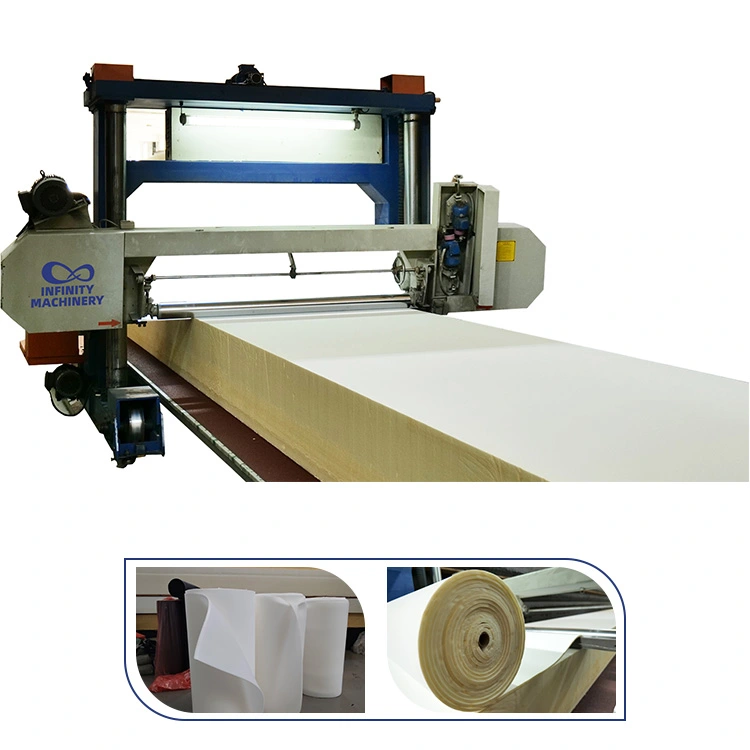
Handles large foam buns. Precise thickness control. Works with continuous foaming lines.
View IF-LT1650If your quilting or sewing stations are waiting on foam, you've got a cutting bottleneck. The IF-FYP6 and IF-LT1650 solve it in different ways for different setups, but both will pay for themselves within a year in labor savings alone — before you count the benefits of consistent quality and higher output.
That factory owner I mentioned? He told me later: "I should have done this years ago. I was so focused on the machines at the end of the line that I forgot about the one at the beginning."
Tell us your daily output and how you're cutting foam now. We'll tell you if — and how fast — a machine would pay for itself.

