Complete guide to achieving flawless tape edge finishing with the IF-T4. Covers needle selection, thread tension, tape alignment, corner stitch quality, speed settings, and troubleshooting.
TECHNICAL GUIDE
IF-T4 Tape Edge Machine: How to Achieve Flawless Mattress Finishing
Master the techniques and settings that produce consistent, high-quality tape edge seams on every mattress
Tape Edge Machine Finishing Quality Production Tips
The tape edge is the most visible seam on a finished mattress. It runs around the entire perimeter, and any inconsistency — uneven stitching, tape misalignment, loose corners — is immediately noticeable. For mattress manufacturers, the quality of the tape edge seam is one of the primary indicators of overall build quality in the eyes of customers and retailers.
The IF-T4 Automatic Tape Edge Machine is designed to deliver consistent, high-quality tape edge seams at production speeds. But even the best machine requires proper setup, adjustment, and technique to achieve flawless results. This guide covers the key settings and practices that make the difference between good and excellent tape edge finishing.
Whether you are a new IF-T4 operator or looking to improve your existing quality, these tips will help you get the most from your tape edge machine.
500-700
Mattresses Per Shift
IF-T4 Output
6
Quality Factors
To Master
1
Operator Per Shift
Single Machine
1. Needle and Thread Selection
The foundation of a flawless tape edge seam starts with the right needle and thread combination. The IF-T4 uses a lock stitch mechanism, meaning both a needle thread and a bobbin thread form each stitch. Getting both right is essential.
- Needle size: For standard mattress fabrics (knitted, polyester blends), use a DP×5 size 18-20 needle. For heavy or multi-layer fabrics, use size 22-23. The needle point should be sharp — a dull needle causes skipped stitches and fabric damage.
- Thread type: Use bonded nylon or polyester thread for both needle and bobbin. These threads have the strength and abrasion resistance needed for tape edge sewing.
- Thread thickness: Tex 40-60 for standard mattresses. Tex 70-80 for heavy-duty applications. Thicker thread creates a more visible seam but requires larger needles.
- Needle replacement schedule: Replace the needle every 8 hours of operation (daily). A fresh needle at the start of each shift prevents 90% of stitch quality issues.
2. Thread Tension Adjustment
Correct thread tension is the single most important factor in tape edge quality. The IF-T4 has independent tension controls for the needle thread and bobbin thread. The goal is to achieve a balanced stitch where the needle thread and bobbin thread interlock at the center of the fabric layers.
- Needle thread tension: Start with a mid-range setting and adjust up or down based on the seam appearance. If the needle thread appears on the bottom of the seam, increase tension. If the bobbin thread appears on the top, decrease tension.
- Bobbin thread tension: Should be lighter than the needle thread. The bobbin thread should pull freely with a slight resistance when you tug it.
- Tension check method: Sew a test seam on scrap fabric matching your mattress construction. Examine both sides of the seam. The stitch should look identical on both sides — no loops, no puckering, no visible thread crossover.
3. Tape Guide Alignment
The tape guide positions the edge tape as it feeds into the sewing head. Misalignment at this point causes the tape to shift during sewing, resulting in uneven tape overhang on the mattress edge.
- Check tape guide alignment at the start of every shift. The tape should feed straight into the sewing head with no lateral movement.
- Tape tension: The tape should feed with slight tension — enough to keep it straight but not so tight that it stretches. Stretched tape will pucker after sewing.
- Tape width: Ensure the tape matches the machine specification. Standard tape for the IF-T4 is 40-50mm wide. Using incorrect tape width causes feed problems.
4. Corner Stitch Quality
The corners are the most difficult part of tape edge sewing. The IF-T4 uses corner stitch sensors that detect the mattress corner and coordinate the needle timing, tape feed, and turning mechanism to create a clean corner seam. For best results:
- Calibrate corner sensors weekly. Sensor drift causes mistimed corner stitches. The IF-T4's PLC includes a sensor calibration routine.
- Check corner stitch appearance regularly. The two stitches at each corner should be identical in length and tension.
- Corner tape allowance: Adjust the tape overhang at corners to match your quality standard. Most factories aim for 2-3mm of tape visible beyond the stitch line at corners.
5. Machine Speed and Feed Rate
The IF-T4 is capable of high-speed operation, but speed must be balanced with quality. The optimal speed depends on mattress size, fabric type, and operator experience:
- Standard operation: 800-1,000 stitches per minute is the sweet spot for most applications. At this speed, stitch quality is excellent and the operator has enough time to guide the mattress.
- Heavy fabrics: Reduce speed to 600-800 spm for thick or multi-layer fabrics. Slower speed gives the needle more time to penetrate and the thread more time to form properly.
- New operators: Start at 500-600 spm and increase speed as the operator gains confidence. A new operator should reach full speed within 3-5 days.
6. Regular Quality Inspection
Even with perfect machine settings, quality can drift during a shift. Implement a routine quality check:
- First-mattress check: Inspect the first mattress of every batch or after every model change. Check all four corners and both long sides.
- Hourly spot-check: Pull one mattress every hour and inspect the tape edge. Look for skipped stitches, uneven tension, tape misalignment, or corner inconsistencies.
- End-of-shift comparison: Compare the first mattress of the shift with the last. If quality has degraded, the machine needs adjustment or maintenance before the next shift.
Common Tape Edge Problems and Solutions
| Problem |
Likely Cause |
Solution |
| Skipped stitches on straight sections |
Dull or bent needle, incorrect timing |
Replace needle, check timing |
| Tape shifting during sewing |
Tape guide misaligned, low tape tension |
Realign guide, adjust tape tension |
| Loose stitches on one side |
Unbalanced thread tension |
Adjust needle/bobbin tension ratio |
| Puckered tape after sewing |
Tape stretched during feeding, or excessive tension |
Reduce tape feed tension |
| Corner stitch skipping |
Corner sensor misalignment |
Recalibrate corner sensors |
| Thread breakage |
Burred thread path, wrong needle size |
Polish thread path, check needle size |
IF-T4 Key Features for Quality Control
The IF-T4 includes several built-in features that help maintain consistent quality:
- PLC-controlled stitch programming: Store stitch parameters for up to 50 different mattress models. Switch between models with one button press — no manual adjustment needed.
- Auto fault detection: The machine detects thread breaks, needle jams, and sensor errors and stops automatically, preventing defective mattresses from continuing down the line.
- Remote diagnostics: Our technicians can connect to your IF-T4 remotely to check settings, review error logs, and guide operators through adjustments.
- Automatic tape cutting: The machine cuts the tape at the end of each mattress cycle with consistent length, eliminating manual cutting and reducing tape waste.
3 Machines for a Complete Finishing Department
These three machines form the core of a professional mattress finishing line — from panel sewing to tape edge to packing.
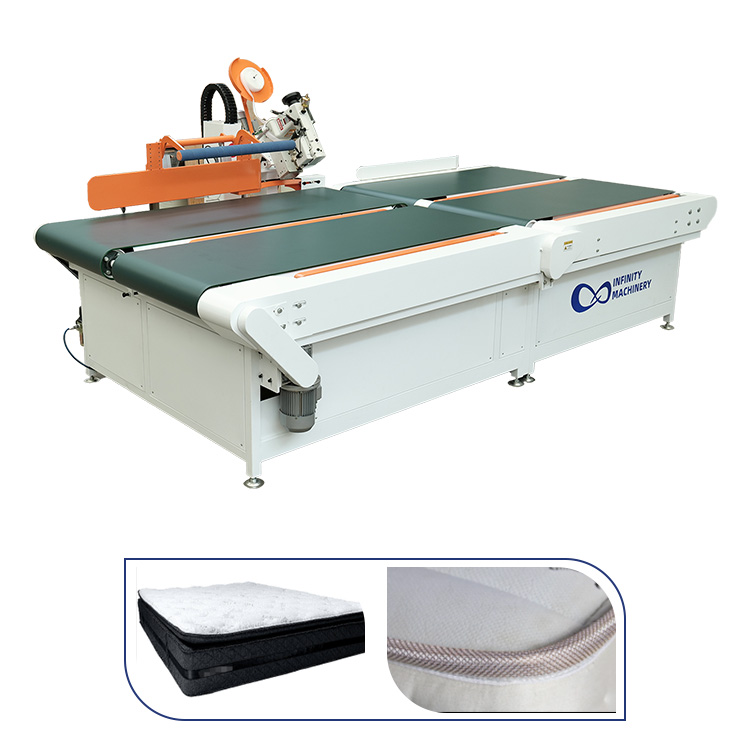
TAPE EDGE
High-speed automatic tape edge. 500-700/shift. PLC-controlled. The standard for professional mattress finishing.
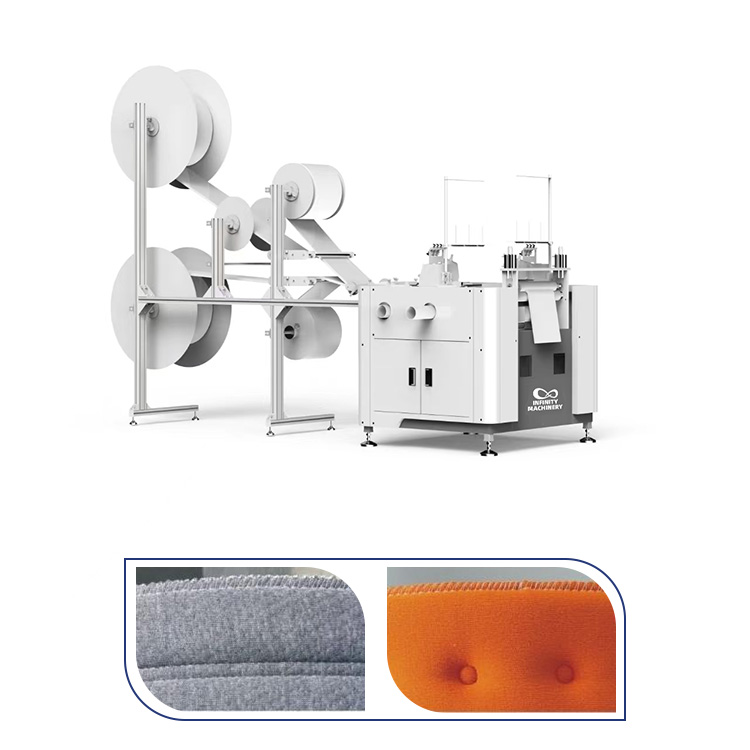
SEWING
Dual-head panel sewing. 400-600/shift. Feeds finished mattress covers to the IF-T4 tape edge station.
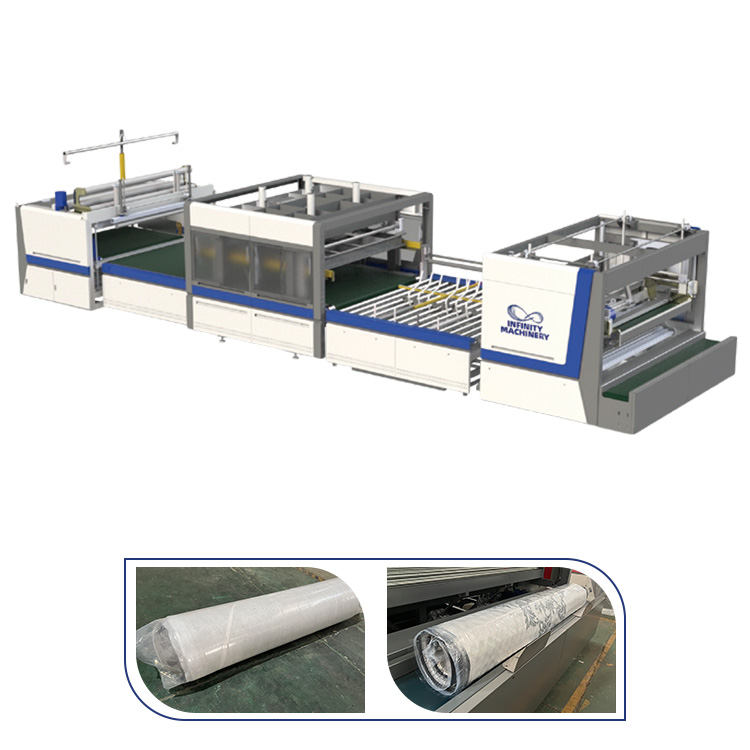
RECOMMENDED UPGRADE
Roll packing after tape edge. 30-40 sec per mattress. Completes your finishing line.
Need Help Achieving Flawless Tape Edge Finishing?
Our tape edge specialists can help with machine setup, operator training, and quality optimization for the IF-T4. Get remote support or schedule an on-site visit.

